Personal Manual
A guide to working with me. Inspired by the concept of a “user manual” — the things I wish I could tell every teammate upfront.
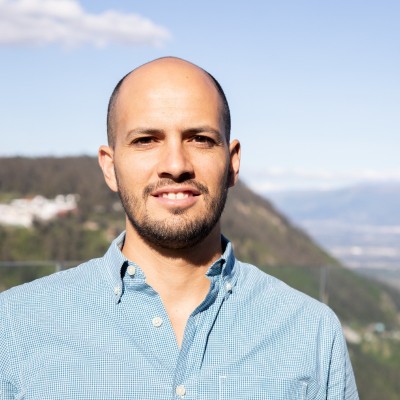
This is me.
These are my core values
- Urgency: In early-stage startups, speed is a competitive advantage. Most things that feel like they need a week of deliberation can be decided in an hour with the right information. I have a low tolerance for unnecessary waiting and a high bias toward shipping, iterating, and learning from reality rather than from decks.
- Ownership: Having been a founder three times, I am wired to treat every problem as mine to solve, not to route to someone else. Ownership means closing the loop, not just flagging the issue. It is the difference between someone who says “I noticed this is broken” and someone who fixes it and tells you what they learned.
- Life-long learner: Education is the biggest equalizer and the Internet is the biggest enabler.
- Build with empathy: Life is too short to live through poorly designed experiences (digital or analog) that haven't taken a user-centric approach to them.
- Pay it forward: Helping others without wanting anything in exchange is the biggest contribution you can make to the world.
The first set of questions are focused on me
What are some honest, unfiltered things about you?
At this point in my life I know I'm more of a trailblazer than a poster child for the establishment. It wasn't always like this. Perhaps it was because I was a single child until the age of 7 or something else entirely, but I definitely felt the “first-child pressure” and expectations that parents and society place on you. I followed the conventional path of being a great student and a competitive athlete during grade school and high school, all in Ecuador. Luckily when I went to college in the U.S. I became free to choose my own path, and that's what led into entrepreneurship and the world of startups.
Burning Man has been one of the most impactful experiences in my life. I attended in 2016 and 2017 and I hope I can one day go back with my family so they can experience what I experienced. The photos of crazy parties and people living it up are all true, but that wasn't the takeaway for me. At Burning Man you live in a giving society where no money or bartering exists. It's pure gifting. You only connect with people for a week, co-live in a desert without any comfort, and never see them again. It's pretty magical. Burning Man is responsible for my ability to not hang on to things or people and instead opened my eyes to loving the process without always focusing on the goal and outcome.
What drives you nuts?
- Lack of empathy and disrespect
- Inertia
- The alarm clock. I stopped using them altogether a few years ago
How can people earn an extra gold star with you?
- Be a yes person!
- Surface a problem but also bring potential solutions
What qualities do you particularly value in people who work with you?
- Resourcefulness
- Grit
- Willingness to help
What does working with you actually feel like when things get hard?
I have a high pain tolerance for difficult situations and a low tolerance for giving up on things I believe in. Some people read that as stubbornness, and I think that is a fair read. But the root of it is conviction, not ego. When I push back on something, it is because I have a strong point of view and I think the stakes are worth the friction. I will always tell you when I disagree, and I will always show my reasoning. What I will not do is nod along to protect the relationship and then let something fail quietly. Founders who have worked with me closely tend to value that. Founders who want pure alignment from day one find it uncomfortable. Both reactions make sense to me.
Are you a barrel or ammunition?
Keith Rabois' framework distinguishes between barrels, people who can take an initiative from idea to outcome entirely on their own, and ammunition, people who are excellent at executing tasks when pointed in the right direction. Both matter, but barrels are the constraint. You can always find more ammunition; you almost never find enough barrels.
I am a barrel. I have spent my career in the earliest stages of companies precisely because that is where ownership is total and the feedback loop between decision and result is immediate. I find the problem, build the approach, and see it through.
The next set of questions are more focused on how I interact with others
How do you coach people to do their best work and develop their talents?
- I like to know what fires people up. I ask a lot of questions until I hear or see this from them.
- I like asking more than preaching. There's more value to people figuring out things on their own if you carve the path for them to find those answers.
- Flywheels should be at the intersection of what they're great at, what gives them energy, and something that the world is willing to pay for.
What's the best way to communicate with you?
- Written, async communication is definitely best for non-ephemeral work and long-term projects, but I enjoy real-time and IRL interactions as well.
What's the best way to convince you to do something?
- Show me how it solves a problem for our users, partners, stakeholders, co-workers, etc. and I'm probably more likely to turn my attention to you right away.
How do you like to give feedback?
- Direct and radical transparency is a great approach.
- Praise in public, criticize in private.
How do you like to get feedback?
- I don't need sugar coating or “Sandwich feedback” but I do need to know you understand the context and have all the information you need to give feedback.
How I think about revenue & sales
In any company, you are either building or selling. Which side are you on?
Both. And I think that tension is actually the most interesting place to work from. The best operators I have been around understood that building without selling is a hobby, and selling without building is a treadmill. What draws me to revenue roles is that they sit at the exact intersection: you are translating what the product does into something the market will pay for, and in the process you learn more about what the product should be than almost any other function. That feedback loop is addictive to me.
What does discovery mean to you, in both sales and product?
Discovery is the skill I am most proud of, and it shows up the same way in product and in sales. The surface-level answer is never the real answer. The 5 Whys exist for a reason — if you stop at the first problem someone names, you are solving the symptom. The real job is to keep asking until the person across from you says something they have never said out loud before. That moment is where trust gets built and where the actual insight lives. In sales, that is how you close. In product, that is how you build something people actually want.
Where does your understanding of sales come from?
A big part of it was geography and timing. I spent years in the Boston and Cambridge area during the peak of the HubSpot era, learning about inbound marketing, sales enablement, and the whole ecosystem that grew up around them. I attended a lot of their events and absorbed a particular philosophy about how buyers want to be treated. That eventually led me to the Challenger Sale, which flipped my mental model: the best salespeople do not just respond to what a customer asks for but reframe the problem in a way the customer had not considered. Teaching someone something new about their own business is the highest-leverage thing you can do in a sales conversation.
Today I follow people who are still pushing the craft forward. Jason Lemkin on what it actually takes to get to $10M ARR, and Jen Abel on founder-led sales and what good GTM motion looks like before you can afford to hire a team.
What is your take on the future of sales talent?
Talent is collapsing. The model of hiring a large specialized team where one person does prospecting, another does demos, and another does success is being disrupted. The startups winning right now are finding people who can own a function end to end: source the lead, run the discovery, close the deal, and keep the customer. In early-stage companies especially, a single "barrel" in a revenue seat is worth more than three specialists who only pass things between each other.